Arlington Chess Club
Est. 1954
“If you wish to succeed, you must brave the risk of failure.”
(Garry Kasparov)
“All that matters on the chessboard is good moves.”
(Bobby Fischer)
ACC is
OPEN
this
Friday
Links
Clearinghouse
Local Clubs
- DC Chess League
- DMV CHess
- Chess Girls DC
- U.S. Chess Center
- Waldorf CC
- Shenandoah Valley CC
- Capital Area Chess
- Snow Chess Academy
- Ashburn CC
Distant Clubs
State / National Associations
Daily News
Resources
Tactics
Databases
Online Stores
GMs /IMs
International
Russian
ACC Forum: Chess Articles
General chess articles provided for the enjoyment of club members. Please send us your submissions!
"Shortest Mates" (Matt Grinberg)
Former ACC member Matt Grinberg (Expert / Candidate Master), who moved to New Mexico in 2010, recently authored an article for ChessCafe.com exploring the shortest possible mates using a queen, rook, bishop, and knight from studies he collected over twenty years ago. Matt started his research in the '70s after reading articles in "Chess Life and Review" and "Evans on Chess." In his article on ChessCafe, Matt says "I selected my favorites from among the ones I found and present them here. Note that the solutions [are] not unique; the move order can be changed and there are some alternate final positions. However, as far as I know, there is no shorter solution for any." You can find the full article with nearly 40 studies at: ChessCafe.
Mikhail Moiseyevich Botvinnik – hundredth anniversary

(Excerpts from Chessbase.com News)
Mikhail Moiseyevich Botvinnik was born on August 17, 1911, and died in 1995, at the age of 84. He was the first world-class player to develop within the Soviet Union, winning the World Championship three times, while working as an electrical engineer, and in fact earning a PhD. The latter part of his life was devoted to his chess school for young talents – and to chess programming. Portrait.
ARCHIVED articles can be found ... here.
NOTE: Have you read a poorly written sentence? Find a bad link? Are we missing important material? Please raise these issues with us at: ACCvachess@gmail.com.
Notable Games
Club members sharing notable or novel games.
Opening Surprises!
By Matt Grinberg, 6-25-2026
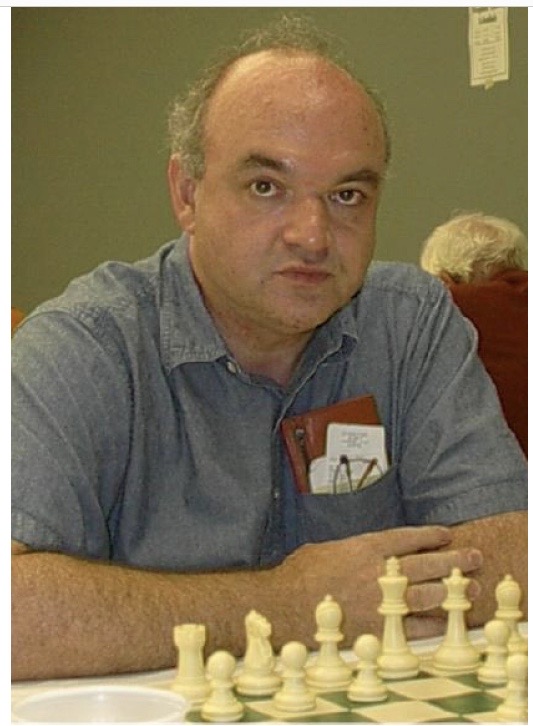
We tend to think that surprises and game winning combinations don't occur in the opening. Generally that is true so long as you are in normal lines. But when you get off into unusual lines, be careful, you never know what might happen.
The following game between Richard Reti and Savielly Tartakover starts off with a normal Caro-Kann Defense line. But at move 5, Reti plays an unusual move. Tartakover plays aggressively to take advantage of the situation. His line is not best, but it is playable. The game could have proceeded as a normal Grandmaster game if Tartakover had payed close attention to Reti's 8th move. Instead he falls into one of the greatest traps of all time!
Reti, Richard - Tartakower, Savielly, 1-0
Vienna, Austria, 1910
Caro-Kann Defense
1. e4 c6 Caro Kann Defense 2. d4 d5 3. Nc3 dxe4 4. Nxe4 Nf6
5. Qd3 Even though this move is seldom played, it scores better than any of the alternatives. Apparently this took Tartakover out of his book.
[5. Ng3 is the most popular move, as played by Reti 14 years later.
5... e5 6. Nf3 exd4 7. Qxd4 Qxd4 8. Nxd4 Bc5 9. Be3 Nd5 10. Ne4 Nxe3 11. Nxc5 Nxf1 12. Rxf1 b6
13. Ne4 O-O 14. O-O-O c5 15. Nb5 Na6 16. Ned6 Be6 17. f4 g6 18. h3 h5 19. Rf2 Kg7 20. f5 gxf5 21. Nxf5 Kg6 22. Nbd6 Rad8
23. Ne7 Kg7 24. g4 hxg4 25. hxg4 Nc7 26. Rfd2 Kf6 27. Nc6 Ra8 28. Rf1 Kg7 29. Nf5 Kg6 30. Ne5 Kg5 31. Nd6 f6 32. Ne4 Kh6
33. Nxf6 Kg7 34. g5 Nd5 35. Rh1 Rh8 36. Nh5 Kg8 37. Rdh2 Kh7 38. Nf6 1-0,
Reti, Richard (CZE) - Belgrano, Rawson Luis, Buenos Aires 1924 Ch Argentina]
The full Article can be found along with other
ARCHIVED GAMES ... here.
Book Reviews
Club members giving book/DVD reviews that cannot be found elsewhere on the web.
Move First, Think Later (Willy Hendriks)

Softcover, 256 pp., New In Chess 2012, $23.95
Review By: IM John Watson
(Summarized from and linked to ‘New In Chess’ Website)
This book won the Book of the Year award from the English Chess Federation. IM Watson says: “Hendriks tries to demolish a number of myths about how to improve one’s chess, as well as …” investigate how a chess player’s mind works. Watson says the review is long because he wanted to give a real feel for the material covered in 27 wide-ranging chapters. Each begins with exercises that are then discussed in the chapter. Watson’s review covers a number of early chapters in greater detail as well as addressing some of the author’s additional topics including criticisms of other authors. He finished his review with: “this is a fun and absorbing read. I recommend it to players of all strengths.” The full review can be found on the Week In Chess website at: here.
ARCHIVED reviews can be found ... here.
Website Reviews
Insight on good/bad websites. Know an interesting chess-related website? Share it with us.
Chessbase.com
(A. Chrisney)
Most players who are serious about studying their games and those of other players have at least heard about ChessBase but the website, Chessbase.com, is also one of the best places to get a daily update of important chess news and events around the world. Set up in 1998, their massive databases, containing most historic games, permit players to analyze and store their games. The program permits searches for games, and positions in games, based on player names, openings, some tactical and strategic motifs, material imbalance, and features of the position. The ChessBase database software integrates chess analysis engines, such as Fritz, Junior, Shredder (all Chessbase products), amongst others. The current version of the program is ChessBase 11, which was released in 2010. They offer an extensive and excellent selection of chess CDs and DVDs, including monographs on famous players, tactical training exercises, and training for specific opening systems. The various “Fritz Trainer” DVDs are a personal favorite. They also publish ChessBase Magazine six times per year, which comes as a thin printed text and accompanying CD with multimedia chess news, articles on opening novelties, database updates (including annotated games), and other articles. All these are designed for viewing within their database software, but many have a more up-to-date version of ChessBase Light than the free version available from their web-page. If you intend to study the game at any level, you simply have to start with some mega-database like Chessbase or the newer ChessKing.
ChessTempo.com
(D. Slack)
The Chess Tempo website offers standard problem solving, blitz problem solving and 2/day endgame problem solving for free. What I love about this site is the feedback you get, whether you get a problem right or wrong. First of all there are the member comments, revealing both their approaches and their blind-spots. Then for the tactics problems there are computer evaluated variations demonstrating why various solution attempts fall short. But what I really think is great is that for the endgame problems, you can click from the starting position to see the outcome for each move for both players to the end of each possible line. Also available for free is an up to date Chess Game Database as well as the ability to play rated games against the computer. As soon as you get a username and password, the problems given to you to be solved become easier or harder, depending on how well you are doing. Chess Tempo gives user ratings for both tactics problems and endgames. There are two categories of premium memberships (Silver currently $20 annually and Gold currently $35 annually). If you click on 'Members' , you will get all the membership information on what is included for each of the premium memberships. For example 20/day endgame problems are available with the Silver membership and an 'unlimited' number for the Gold membership. And Tactic/Endgame problem game source links are available with Gold memberships.
Tournament Reviews
Is that tournament worth your time? Maybe something in this section can help you decide.
Maryland Open
(A.R. Chrisney)
Usually held in the Spring. As with many recent big tournaments sponsored by the Maryland Chess Association, the Maryland Open returned to the spacious Rockville Hilton this year. This site has quickly become one of the go-to facilities for NTD and organizer Mike Regan. The event is noted for many refinements offered by Regan including providing boards and sets for all players and clocks for the top section. In addition, Mike uses a 30-second increment instead of the standard 5-second delay to avoid some of the clock-pounding time scrambles often seen in tournament chess. This author can personally attest to the usefulness of this time control as my second round U2000 opponent and I took full advantage of it in our game. Mike also provides continental breakfast to all players on Sunday morning, "gratis" (meaning “free”) - a nice feature as the first round that day starts at 9am. Another cool feature was that Regan (as noted in Chess Life) actually will TEXT players their pairings if they provide a cell phone number so that you don’t have to scrum for your table and pairing at the beginning of each round! Nice little tournament feature! Though this year, Rockville had some town marathon running down Rockville Pike and it caused severe delays for some tournament commuters as the marathoners ran down the center of Rockville Pike for miles, and miles - only easily circumventable to those who know Rockville well. Regan also added a fourth section this year making it "Open, Under 2000, Under 1600, and Under 1200" as well as increasing the prize fund to a total of $7250. This year, he also broadcasted the top two games live both in the skittles room and at mdchess.com – though I hear the remote broadcast didn’t do as well as the on-site version. Finally, Todd Hammer provided a wonderful selection of books and equipment to peruse in between rounds. For an event that has seen its down times in recent years (when held at local community colleges), this has turned into a great local event! Another "well done" to Mike Regan.
Virginia Open
(A.R. Chrisney)
The Virginia Open for 2012 was held at the Double Tree Hotel – Dulles Airport which has quickly become a favorite venue for chess tournaments in Northern Virginia. Though, with the imminent retirement from chess directing of NTD Mike Atkins, it is unclear who VCF will have pick up the mantle for running this event and if it will continue to be run at this venue. One plus about being held in this section of the DC metro area is that it draws in more players from the Route 7 corridor who might not attend events held over along 1-95 or downtown DC. The event features players in two sections – Open and Amateur (U1800) – and usually gets well over 100 players total. The hotel rooms are reasonably priced but elegantly furnished (and you get a fresh baked cookie upon check-in!). The hotel used to be a little hard to get to off Route 28 in Virginia but they have added a cut through off the highway (Warp Drive) that is just down from the hotel. The hotel restaurant provides a great breakfast buffet and their lunch offerings are good as well, though limited in variety. There are many eateries in the nearby Dulles Towne Mall and Dulles Eastern Plaza just north of the hotel, from the ubiquitous McDonalds and Chick-Fil-A to Red Robin, Longhorn Steakhouse and the Cheesecake Factory. The tournament organizers added a skittles room this year so there was space to spread out into – without it you essentially had to go to your room or off “campus” to get some personal space. Local book-seller Todd Hammer has added some hardware to his usual wares and provided a great offering of books, DVDs, chess sets and clocks for everyone’s perusal. This is a good 5-round, 3-day event for this area.